
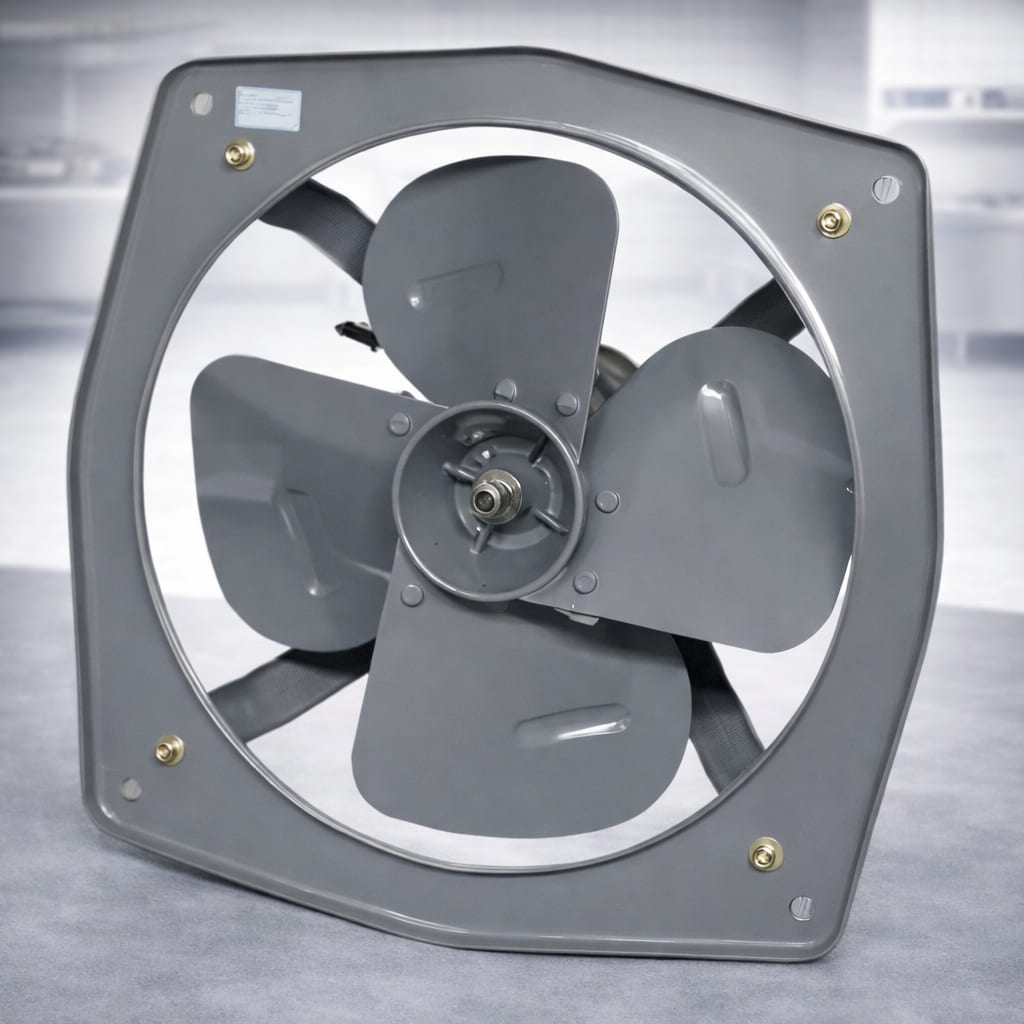
Description
Exhaust Fan – The Essential Solution for Fresh, Clean, and Comfortable Spaces
Indoor air quality plays a crucial role in health, comfort, and productivity. Without proper ventilation, rooms become stuffy, damp, and filled with pollutants. This is where the Exhaust Fan becomes a vital tool. By expelling stale air, moisture, smoke, and odors, it creates a healthier and more refreshing indoor environment.
From residential kitchens and bathrooms to commercial establishments and large industrial setups, exhaust fans are indispensable. They are not only designed to maintain hygiene and comfort but also to protect structures and equipment from the harmful effects of excess heat and humidity.
A powerful Exhaust Fan is not just an accessory—it’s a necessity for modern living and working environments.
What is an Fan?
An fan is a mechanical ventilation device that pulls air from inside a room and expels it outdoors. Unlike standard fans that circulate air within a space, an exhaust fan actively removes unwanted air and replaces it with fresh air through natural inflow.
By eliminating contaminants, odors, and excess heat, exhaust fans ensure that indoor spaces remain breathable, cool, and pleasant. They are an essential part of modern ventilation systems, working quietly and efficiently behind the scenes.
Key Components of an Fan
Although exhaust fans may look simple, they are built with specialized components that work together for maximum efficiency.
Fan Blades
The blades are designed to draw in air effectively. Depending on the model, they can be metal, plastic, or composite, each chosen for strength and durability.
Motor
The motor powers the blades, ensuring smooth and consistent operation. High-quality motors are energy-efficient and long-lasting.
Housing
The housing encloses the motor and blades while guiding airflow in the right direction. Durable materials prevent corrosion and wear.
Grills and Covers
Protective grills prevent dust buildup and provide safety while allowing air to flow freely.
Mounting Frame
This part secures the fan to walls, ceilings, or windows, ensuring stability and vibration-free operation.
Types of Exhaust Fans
Exhaust fans come in various designs to suit different applications.
Wall-Mounted Fans
Perfect for kitchens and bathrooms, these fans are mounted on walls to directly expel air outside.
Ceiling-Mounted Fans
Installed in ceilings, these fans are commonly used in restrooms, offices, and commercial spaces where air needs to be vented upward.
Window Exhaust Fans
Easy to install on windows, these are popular in homes for quick ventilation.
Inline Exhaust Fans
Placed within ducts, inline fans are powerful and used for long-duct ventilation systems, often in commercial and industrial buildings.
Industrial Fans
Heavy-duty fans designed for factories, warehouses, and workshops where large volumes of air need to be extracted continuously.
Applications of Fans
The versatility of exhaust fans makes them essential across multiple settings.
Residential Homes
Bathrooms and kitchens rely heavily on exhaust fans to eliminate steam, smoke, and odors, preventing mold growth and maintaining comfort.
Commercial Establishments
Restaurants, cafes, gyms, and offices use exhaust fans to maintain fresh and hygienic environments for customers and employees.
Industrial Facilities
Factories, workshops, and warehouses use large exhaust fans to remove dust, smoke, fumes, and excess heat, protecting workers and equipment.
Healthcare and Laboratories
Exhaust fans maintain sterile environments by expelling harmful particles and controlling air pressure in labs and hospitals.
Data Centers and Server Rooms
Heat management is critical for IT equipment, and exhaust fans play a role in keeping environments cool.
Benefits of Installing an Fan
The advantages of using exhaust fans go far beyond basic ventilation.
Improved Air Quality
They expel harmful pollutants, allergens, and unwanted particles, ensuring healthier breathing conditions.
Moisture Control
Exhaust fans prevent condensation and dampness, reducing the risk of mold and mildew growth.
Odor Elimination
Cooking smells, smoke, or chemical odors are quickly removed, leaving indoor spaces fresh.
Temperature Regulation
By removing hot air, fans contribute to cooling rooms, lowering the strain on air conditioning systems.
Structural Protection
Moisture can damage paint, wood, and metal structures. Exhaust fans protect interiors by reducing humidity levels.
Energy Efficiency
Modern fans consume minimal power while significantly enhancing comfort and indoor air quality.
How Does an Fan Work?
The working principle of an exhaust fan is simple yet powerful. When switched on, the blades rotate, drawing in indoor air and pushing it through the fan housing toward the outside. As the air exits, it creates a pressure difference that allows fresh air from outside to flow in naturally through windows, doors, or ventilation inlets.
This constant cycle of expelling stale air and allowing fresh air in ensures a healthy balance and comfortable environment.
Modern Innovations in Fan
Technology has advanced fans from simple devices to smart, efficient solutions.
Energy-Efficient Motors
Modern fans use low-wattage motors that reduce power consumption without compromising performance.
Noise-Reduction Technology
Advanced blade designs and acoustic housings ensure whisper-quiet operation, even in high-capacity models.
Smart Fans
Some fans now feature humidity and motion sensors that automatically activate when needed, ensuring convenience and energy savings.
Stylish Designs
From sleek ceiling fans to compact wall-mounted models, modern designs blend seamlessly with interior aesthetics.
Eco-Friendly Materials
Manufacturers are now using recyclable materials and sustainable production methods to reduce environmental impact.
Maintenance and Care of Fans
To keep exhaust fans functioning at their best, regular maintenance is essential.
Blade Cleaning
Dust and grease buildup can reduce efficiency. Cleaning blades ensures consistent airflow.
Motor Checks
Periodic inspection prevents overheating and prolongs the fan’s life span.
Filter Replacement
Fans with filters require regular replacement to maintain performance.
Lubrication
Lubricating moving parts prevents wear and tear, reducing noise and energy usage.
Electrical Safety
Connections should be checked to avoid electrical faults or inefficiencies.
Choosing the Right Fan
Selecting the right fan depends on the space and its requirements. Key factors include:
-
Room size and air volume
-
Mounting position (wall, ceiling, or window)
-
Noise tolerance levels
-
Energy efficiency ratings
-
Durability and warranty
-
Aesthetic compatibility with interiors
For industrial settings, airflow capacity (CFM) and motor strength are critical considerations. Consulting experts helps in choosing the most effective option.
Future of Exhaust Fans
The future of fans is set to become smarter, quieter, and greener. With growing awareness of indoor air quality and sustainability, manufacturers are focusing on energy-efficient designs, smart automation, and eco-friendly production methods.
Smart home integration will allow fans to be controlled via mobile apps, while advanced sensors will make them self-regulating. These innovations will make fans even more indispensable in homes, offices, and industries.
Conclusion
An Exhaust Fan is more than just a ventilation tool—it is a guardian of health, comfort, and safety. By removing heat, odors, moisture, and pollutants, exhaust fans ensure that indoor environments remain fresh and inviting.
From simple bathroom fans to heavy-duty industrial models, the versatility of exhaust fans makes them one of the most essential devices in modern living and working spaces. With innovations in energy efficiency, smart technology, and design, the exhaust fan will continue to evolve as a reliable, eco-friendly, and powerful ventilation solution for the future.

Reviews
There are no reviews yet.