
Description
Centrifugal Blower – Powerful Airflow Solutions for Industrial and Commercial Applications
Introduction to Centrifugal Blower
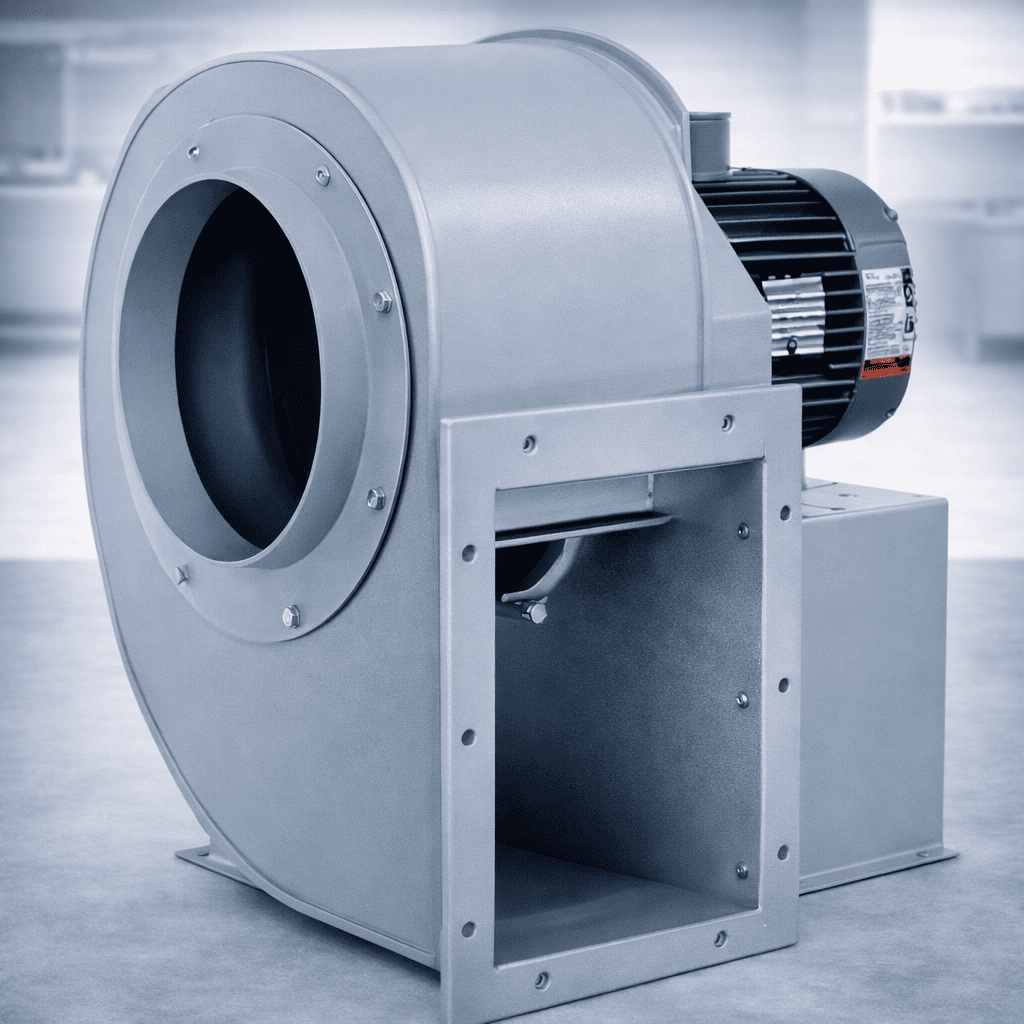
A Centrifugal Blower is one of the most reliable and powerful air-moving devices used across industries to generate high-pressure airflow. Unlike axial fans, which move air in a straight line, centrifugal blowers draw air into the center of the fan and then expel it at a 90-degree angle through centrifugal force. This unique design allows them to handle higher pressures, making them essential in industries that require efficient ventilation, cooling, heating, and dust control.
How a Centrifugal Blower Works
The working principle of this blower is simple yet highly effective. Air enters the fan wheel through the inlet at the center. As the wheel rotates, the blades accelerate the air outward using centrifugal force. This creates a powerful airflow directed through the outlet at high pressure. The design allows for consistent performance even under demanding conditions, making it ideal for heavy-duty industrial use.
Key Components of a Centrifugal Blower
Several precision-engineered components come together to ensure optimum performance:
-
Impeller/Fan Wheel: The heart of the blower that accelerates the air.
-
Housing/Casing: Encloses the impeller and directs airflow efficiently.
-
Inlet and Outlet Ducts: Ensure smooth air entry and exit.
-
Drive System: Includes direct drive or belt drive for rotation.
-
Bearings and Seals: Maintain durability and minimize wear.
-
Motor: Provides the power needed for operation.
Each component is crafted with precision to ensure long-lasting, vibration-free, and efficient performance.
Applications Across Industries
The versatility of centrifugal blowers makes them indispensable in many fields:
-
HVAC Systems: Maintain temperature control and ventilation in buildings.
-
Industrial Processing: Remove fumes, dust, and contaminants.
-
Power Plants: Assist in combustion air supply and cooling.
-
Food Industry: Drying, packaging, and clean air processing.
-
Cement & Steel Plants: Handle dust collection and high-temperature airflow.
-
Pharmaceuticals: Maintain sterile and controlled environments.
This wide range of applications highlights their importance in creating safe, efficient, and productive environments.
Advantages of Centrifugal Blowers
These blowers are a preferred choice for many industries due to their unmatched benefits:
-
High Pressure Capability – Easily moves air through ducts, filters, and dampers.
-
Durability – Built with robust materials to withstand tough environments.
-
Efficiency – Provides stable airflow even under varying loads.
-
Low Maintenance – Designed with fewer moving parts for long-term reliability.
-
Flexibility – Available in multiple sizes and configurations.
-
Noise Control Options – Advanced designs reduce vibration and noise.
Energy Efficiency and Performance
Modern centrifugal blowers are engineered with energy-saving designs. High-efficiency motors and optimized impeller geometry reduce power consumption without compromising airflow. By lowering energy costs, industries achieve sustainable performance while maintaining environmental responsibility.
Importance in Air Quality and Ventilation
Maintaining clean and safe air is crucial in workplaces. A Centrifugal Blower plays a vital role in dust collection systems, fume extraction setups, and ventilation networks. By removing hazardous particles, toxic fumes, and excess heat, it safeguards worker health and ensures compliance with environmental safety standards.
Advanced Engineering and Customization
Today’s centrifugal blowers are not one-size-fits-all. Manufacturers offer customized solutions to suit specific industry requirements:
-
Single or Double Inlet Fans – Based on airflow needs.
-
High-Temperature Blowers – For furnaces and kilns.
-
Corrosion-Resistant Models – For chemical and marine industries.
-
Explosion-Proof Blowers – For hazardous locations.
-
Compact Blowers – For small-scale applications.
This ability to tailor solutions ensures maximum efficiency and safety in unique environments.
Role in HVAC Systems
Heating, ventilation, and air conditioning systems depend heavily on centrifugal blowers to circulate air through ducts and filters. They provide consistent pressure for large buildings, ensuring every room receives adequate ventilation. Their ability to push air across long distances makes them superior to axial fans in HVAC designs.
Safety and Reliability Features
When handling high-pressure airflow, safety cannot be compromised. Centrifugal blowers are designed with:
-
Dynamic Balancing: Prevents vibrations and ensures smooth operation.
-
Thermal Protection: Safeguards motors from overheating.
-
Corrosion-Resistant Coatings: Enhances longevity in harsh environments.
-
Heavy-Duty Bearings: Ensure reliable, long-term performance.
These features make them dependable even in the toughest working conditions.
Maintenance Guidelines
Proper maintenance extends the life of any blower:
-
Regular Cleaning of Impellers – Prevents dust accumulation.
-
Lubrication of Bearings – Ensures smooth operation.
-
Inspection of Belts and Motors – Detects wear before failure.
-
Checking for Vibration or Noise – Helps identify misalignment early.
-
Filter Replacement – Keeps airflow unobstructed.
Following these practices keeps the blower operating at peak performance.
Standards and Certifications
To ensure safety and efficiency, centrifugal blowers are manufactured under international standards such as ISO and AMCA (Air Movement and Control Association). These certifications guarantee quality, performance, and compliance with global benchmarks.
Choosing the Right Centrifugal Blower
Before investing in a blower, consider factors like:
-
Required airflow and pressure.
-
Operating environment (temperature, humidity, presence of chemicals).
-
Power source and energy efficiency.
-
Space availability for installation.
-
Noise and vibration considerations.
Working with an experienced supplier ensures the selection of the right model for your specific application.
Future of Centrifugal Blowers
With industries shifting toward sustainable solutions, the future of centrifugal blowers lies in:
-
Smart Sensors & IoT Integration: Real-time monitoring of performance.
-
AI-Based Maintenance Alerts: Predict issues before breakdowns.
-
Eco-Friendly Designs: Higher energy efficiency with lower emissions.
-
Compact, High-Output Models: Delivering powerful airflow in smaller packages.
These innovations will make centrifugal blowers more efficient, sustainable, and smarter than ever before.
Conclusion
A Centrifugal Blower is more than just an industrial fan—it is the powerhouse of ventilation, dust control, and air circulation. Its ability to deliver high-pressure, reliable, and efficient airflow makes it indispensable in countless industries. By combining advanced engineering, energy efficiency, and durability, it ensures safety, comfort, and productivity in diverse applications. Investing in a centrifugal blower means investing in long-term performance, sustainability, and operational excellence.

Reviews
There are no reviews yet.